
Mastering Tech Skills as a Creative Entrepreneur: How Treehouse Help Me Move Past My Coding Mistakes
I wanted to feel capable, not like technology was a locked room I couldn’t enter.

I didn’t learn to code to become a web developer. I just wanted to stop feeling intimidated by the technology I used daily and finally understand how things worked beneath the surface. I wanted to feel capable, not like technology was a locked room I couldn’t enter.
So I joined Treehouse, opened my first HTML lesson, and felt that familiar mix of curiosity and uncertainty—like standing at the edge of something new.
Learning tech taught me much more than syntax. It taught me how to learn and what structure actually supports my creativity.
It also revealed lessons about systems, workflows, and consistency that I still use today as a Content + Workflow Strategist.
Getting there wasn’t exactly a straight line.
I made plenty of mistakes—false starts, self-doubt, and procrastination led me through some twists and turns. I avoided projects because I didn’t feel ready and spent too much time trying to solve problems alone.
Owning up to mistakes can be difficult for the ego, but it isn’t the end of the world.
Well, usually. 🤨
Treehouse didn’t magically eliminate my mistakes, but it did help me move past them.
Here are five mistakes I made while learning to code, how Treehouse shaped that experience, and five lessons I hope anyone can apply when developing new skills without overwhelming themselves.

Mistake #1: Overloading on Resources
My first mistake was following many tutorials at once.
I jumped from coding tutorials to reading books when I was frustrated by a block of code that wouldn’t function properly.
One tutorial suggested using the Sublime Text editor while another tutorial recommended Gedit.
I had about four text editors: Sublime Text, Gedit, and Notepad.
And the funny thing is, I no longer use any of these editors as I currently use Visual Studio Code.
Clearly, my learning lacked focus.
What Helped: Focus on one or two Learning Resources at a Time.
The internet offers a plethora of resources for learning web development.
Choose one primary source for learning a new skill or tech stack.
I like to feel immersed in the subject I’m learning.
As such, I use Treehouse as my go-to learning resource for accessing quality tech education.
I’ve been a student at Treehouse since 2013.
It features learning tracks to help students focus and immerse themselves in topics - building real-world projects along the way.
Mistake #2: Not Building Projects Early On
My second mistake was not applying what I was learning to real projects early enough.
I’d finish a lesson or work through a tutorial, then move on to the next one. I was consuming information, but I wasn’t doing enough to turn that information into practical skills.
When I thought about building something of my own, I’d draw a blank on how to put the wheels to the road, so to speak.
How do I bring my ideas to life? What are the first and the next steps?
I worried about the gaps in my knowledge. And so I lacked the confidence to contribute to open-source projects.
I felt as though I needed to know all the things before I could participate.
In reality, I was over-preparing.
What Helped: Learn by doing.
Books and courses can introduce you to new concepts, but hands-on practice helps you understand how those concepts work together.
Treehouse’s hands-on projects and exercises gave me opportunities to apply what I was learning instead of simply watching or reading about it.
Don’t wait until you feel ready.
That shift matters because you don’t have to master an entire subject before you begin creating something useful.
Perhaps building a full offline-friendly web app is outside your scope at the moment. Build a simple webpage. Re-create a design you admire. Make a basic tool that solves a problem you encounter regularly.
As your confidence grows, you can explore longer challenges, such as 100 Days of Code, or find an open-source project that aligns with your interests and current abilities.
You can also break a larger project into smaller, manageable tasks. Rather than asking. “How do I build an entire web app?” ask, “What is one small part I can build today?”
The systems lesson: Implementation is the real teacher. A system only works when you put it into practice.
This lesson extends beyond coding. Whether you’re building a business workflow, or testing a content strategy, practical application helps you discover what works and what needs some adjustment.
So, you don’t have to feel ready to begin. You become more capable by beginning.
Mistake #3: Fear of Asking for Help

When I began learning to code, I didn’t have much of a learning community.
Some tech spaces can feel unwelcoming or downright toxic, particularly for people from marginalized backgrounds. As a woman learning in tech spaces, I didn’t always feel comfortable asking questions or admitting when I didn’t understand something.
So I spent too much time troubleshooting problems on my own.
One of the first resources I used was Michael Hartl’s Ruby on Rails Tutorial. It was both illuminating and intimidating, especially when it came to using the command line to navigate files and run programs.
I didn’t know all the terminal commands or even how to get out of IRB, it’s like a mini program that is installed with Ruby (side note: type ‘exit’ from the command line).
To make matters more interesting, I had a 10-year-old development machine running Windows OS (it has since bit the dust. Pour one out for the homie.) All sorts of errors popped up on that machine as it was missing important features for Ruby on Rails app development.
After a bit (read: a lot) of troubleshooting, I finally asked a friend for feedback.
He suggested I install Ubuntu Linux on my machine.
Me: What the what, now?
As it turned out, his suggestion helped resolve the issues I was experiencing.
Would I eventually have figured it out myself? The optimist in me says maybe.
But asking for help saved me from spending even more time stuck.
What Helped: Find Your People and Set a Time Limit for Troublshooting.

Treehouse’s community forums gave me another place to ask questions, get feedback, and learn from other people working through similar challenges.
Connecting with other learners helped me realize that I didn’t have to figure everything out alone.
I also learned that helping other people troubleshoot their problems could deepen my own understanding of JavaScript concepts. Explaining an idea to someone else often reveals gaps in your own knowledge — and gives you an opportunity to share what you’ve learned.
Here are a few ways to build a support system for your learning journey:
- Ask questions in online communities. Platforms such as Stack Overflow, Reddit, and learning-specific forums can help you find answers and learn from other people’s experiences.
- Find or start a study group. An accountability partner can help you stay focused on your learning or project goals.
- Attend a meetup. Local and online communities offer opportunities to connect with people who share your interests and collaborate on projects.
- Consider a mentor. Someone with more experience can offer perspective, feedback, and guidance when you encounter a challenge.
If you work with a mentor, respect their time, agree on how and when you’ll meet, and come prepared with specific questions. If the arrangement involves payment, discuss compensation and expectations upfront.
I eventually adopted a personal rule: if I couldn’t make meaningful progress on a problem within 24 hours, it was time to reach out for help.
You can set a shorter limit depending on the problem and your circumstances. The point is to avoid spending hours repeating the same unsuccessful steps.
The systems lesson: Support is part of a sustainable system. You don’t have to build everything — or learn everything — in isolation.
Additional tips on how to accelerate your learning
Also, many learning platforms, such as Treehouse (referral), have forums dedicated to helping students get feedback on their personal coding projects.
Helping other people debug and troubleshoot their issues helped me better understand JavaScript concepts and find a way to pay it forward in the community.
- Post your question in a forum. Sites like Reddit and Stack Overflow act as a living knowledge base where people can post questions and reply to different issues.
- Find or start a study group. This can be a great way to find an accountability partner to help you reach your learning or project goals.
- Attend a local meetup. Consider attending free or low-cost local meetups if you are able. Meetups, local or online, are great opportunities to collaborate on projects for a good cause.
- Find a mentor. Ask someone who is further along than you to act as your mentor.
More tips for learning with a mentor
- Be respectful of their time. Set a schedule of when and how you both will meet.
- Discuss compensation for their time, or if some other payment agreement is necessary.
- Stay on topic. Come prepared with questions you’d like feedback on.
Mistake #4: Lack of Consistency
As mentioned at the top of the post, I had a lot of false starts. My attention was split between juggling a full-time job and other demands of the day.
Though I maintained a schedule, my study sessions lacked structure. I didn’t take study breaks and would often skip meals.
I sat at my desk, distracted, absentmindedly scrolling through social media, checking my email in another tab.
Eventually, I’d get tired - my study sessions were often at night - and promise to do better tomorrow.
My learning journey was full of false starts.
I was juggling a full-time job and the usual demands of everyday life, so finding time to study wasn’t always easy.
Even when I managed to maintain a schedule, my study sessions lacked structure.
I’d sit at my desk, open a tutorial, and become distracted by social media or email. I often studied late at night, skipped breaks, and pushed myself to keep going even when I was tired.
Eventually, I’d run out of steam and promise myself I’d do better tomorrow. Sound familiar?
I thought I needed more motivation and discipline. What I actually needed was a routine that worked with my life.
What Helped: Create a Consistent, Realistic Routine
I began experimenting with a more structured approach to my study sessions using the Pomodoro technique.
Here’s what my routine looked like:
- Choose a specific task. Instead of vaguely deciding to “study JavaScript,” I’d set a goal, such as completing a lesson or working through a particular exercise.
- Remove distractions. I’d close unnecessary tabs, put away my phone, and focus on the task in front of me.
- Set a timer. I typically used 45-minute focus sessions, followed by a break.
- Review my progress. At the end of each session, I’d check what I’d accomplished and decide what to tackle next.
- Know when to stop. I studied for about three hours in the evenings. I knew that pushing beyond that point wasn’t necessarily productive — especially when I was already tired.
And yes, sometimes my alternative activity was watching creative pet videos on YouTube. Hey, you’ve got to know your limits and learn to work within them.
If 45 minutes feels too long, start with 25 minutes. You can experiment with shorter focus sessions and gradually adjust your routine to suit your attention span, energy, and schedule.
Just as importantly, take breaks. Rest is part of the process, not a reward you have to earn by working yourself into exhaustion.
Treehouse’s self-paced learning format and structured tracks supported this approach by giving me direction without requiring me to learn everything at once.
The systems lesson: Consistency comes from structure, not willpower alone.
You don’t need an elaborate productivity system or a rigid daily schedule. You need a realistic routine that helps you return to your goals, even when life gets busy.
Predictable touchpoints can be more useful than putting pressure on yourself to make progress every single day.
Mistake #5: Avoiding Practice That Felt Intimidating
Another challenge was avoiding exercises and coding challenges that made me uncomfortable.
I worried about getting the answers wrong or discovering that I didn’t understand a concept as well as I thought I did.
It’s tempting to stick with familiar activities because they feel productive and reassuring. Watching another tutorial can feel easier than attempting an unfamiliar problem without a step-by-step guide.
But there’s a difference between recognizing an answer and being able to work through a problem yourself.
What Helped: Embrace Repetition and Problem-Solving
Treehouse’s quizzes and hands-on exercises provided opportunities to revisit concepts and practice applying them.
Repeated practice helped me become more comfortable with problem-solving. Instead of expecting myself to understand everything immediately, I could work through an exercise, make mistakes, review the material, and try again.
You can apply this approach to almost any skill.
Want to get better at drawing? Sketch the same subject several times, experimenting with different techniques.
Want to improve your writing? Practice different introductions and headlines.
Want to improve a business workflow? Test a small change, observe the result, and refine the process.
The goal isn’t to get everything right on the first attempt. It’s to create opportunities to practice, learn, and improve.
The systems lesson: Repetition builds reliability, and reliability creates ease. Progress often comes from returning to the basics, not constantly searching for something new.
What Treehouse Did Well for Me
After working through these challenges, I began to understand what I needed from a learning platform.
I didn’t need an endless collection of resources. I needed a clear path, opportunities to practice, and a way to get support when I became stuck.
Here’s what I appreciated about Treehouse based on my experience.
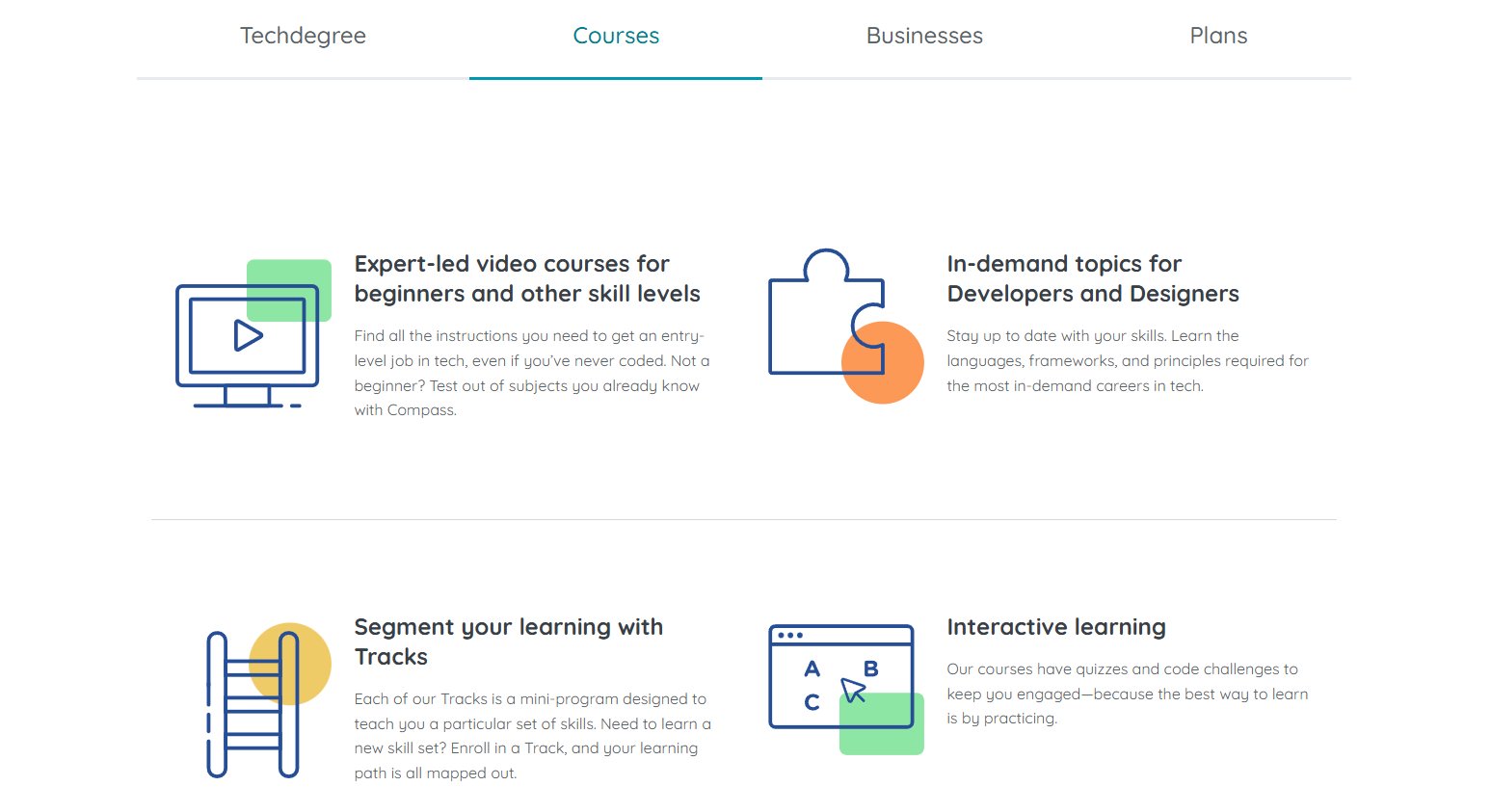
- Guided Learning Paths. Structured learning tracks helped me focus on specific subjects and work through lessons in a more organized way. Having a direction reduced the time I spent wondering what I should learn next.
- Hands-On Projects and Exercises. The opportunity to apply concepts through projects and exercises helped bridge the gap between learning about a skill and using it.
- Community and Forums. Having a place to ask questions and learn from other people made the process feel less isolating.
- Self-Paced Learning. Being able to work through material at my own pace was useful when balancing learning with work and other responsibilities.
- Clear, Digestible Instruction. I appreciated having lessons that broke technical concepts into smaller pieces, making unfamiliar topics easier to approach.
Of course, Treehouse wasn’t a magic solution. No platform can do the learning for you. It can’t guarantee consistency, replace every form of community or mentorship, or eliminate the discomfort of trying something new.
You still have to practice, ask questions, and make time for your goals.
But a good learning environment can make those steps feel more manageable.
What Learning to Code Taught Me About Building Better Systems
Looking back, the biggest lessons weren’t limited to programming. They changed how I think about learning, productivity, and the way we structure our work.
Focus on fewer inputs. You don’t need to consume every resource before you can take action. Choose a starting point and give yourself room to make progress.
Build before you feel completely ready. Action helps you discover what you know, what you need to learn, and where you can improve.
Make support accessible. Asking for help doesn’t mean you’ve failed. It means you’ve recognized when collaboration is more effective than working alone.
Create routines that fit your life. A sustainable process is more useful than an ambitious plan you can’t maintain.
Leave room for iteration. Systems, like skills, improve through testing, feedback, and adjustments.
These principles now influence how I approach my work as a Content + Workflow Strategist.
I believe systems should support the people using them. They should make it easier to focus, follow through, and move toward meaningful goals — not create another layer of pressure.
The same applies whether you’re learning a technical skill, managing a content calendar, organizing client work, or trying to make more room for the creative projects you love.
You don’t need to optimize every minute of your day. You need a structure that helps you spend your time and energy more intentionally.
Should You Try Treehouse?
If you’re curious about learning web development or want to feel more comfortable with technology, Treehouse may be worth exploring.
Its guided learning paths, hands-on exercises, and self-paced format helped me learn in a more structured way. I appreciated having a place to start instead of piecing together an entire curriculum on my own.
It’s particularly worth considering if you enjoy learning through a combination of instruction and practice.
That said, the best resource for you depends on your goals, budget, preferred learning style, and the support you need. You don’t have to pay for a platform to start learning tech skills.
Start with what works for you, and adjust as your needs change.
Try Treehouse: A Platform That Supported My Coding Journey
If you’re looking for a structured, beginner-friendly place to explore tech skills, I’ve used Treehouse throughout my learning journey.
Its guided tracks and hands-on learning approach helped me move beyond information overload and develop a more focused way of learning.
Ready to explore?
Final Thoughts: Your Creativity Deserves Structure That Supports It
Learning tech skills didn’t necessarily turn me into the developer I’d originally imagined becoming.
Instead, it helped me understand how I learn, how I approach challenges, and how much difference the right structure can make.
I learned that progress doesn’t come from collecting every resource, waiting until I feel ready, or forcing myself to work harder when I’m already exhausted.
It comes from taking manageable steps, practicing consistently, asking for help, and giving myself permission to learn along the way.
Those lessons still matter to me today.
If you’re a creative entrepreneur who wants to feel more confident with technology, build new skills, or bring more structure to your work, I hope my experience reminds you that you don’t have to figure it all out at once.
Start small. Learn by doing. Ask for support when you need it.
If you’re ready to bring that same clarity to your business workflows, my Systems Audit Lite can help you spot opportunities to make your systems more supportive, practical, and aligned with how you work.
Your creativity deserves structure that feels like support — not pressure.